Companies are facing a pivotal moment as AI reshapes every facet of society. And as AI is accelerating at unprecedented speeds, many companies are already harnessing practical applications to deliver value. Nearly every company is developing a strategy for incorporating AI-enhanced processes whether to gain internal efficiency or improve external client engagement.
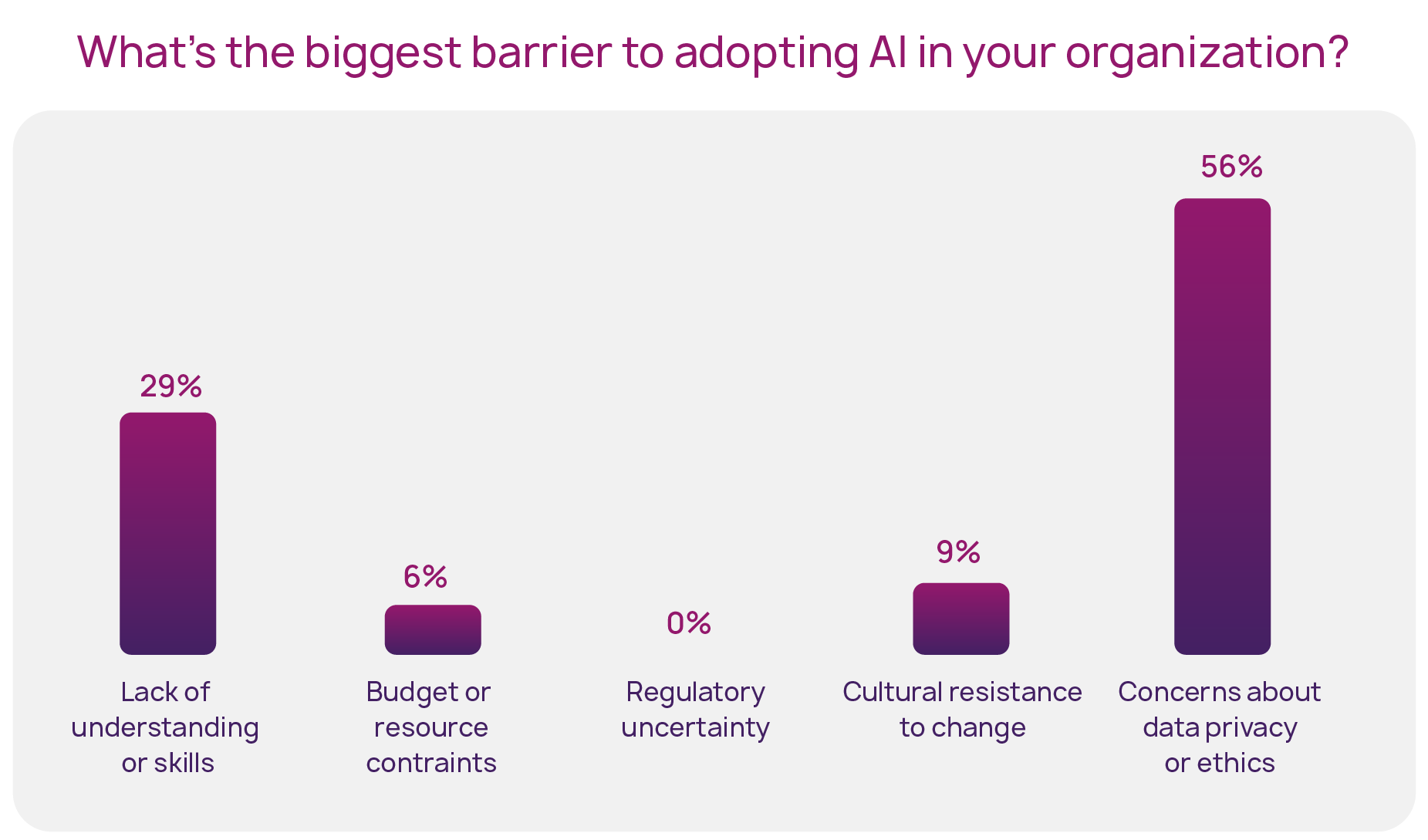
A recent survey of business leaders at the 2025 Computershare Industry Conference in Washington, DC, which includes feedback from General Counsel, Corporate Secretaries, Investor Relations, and C-suite executives, provides a look at companies’ approaches and views on AI:
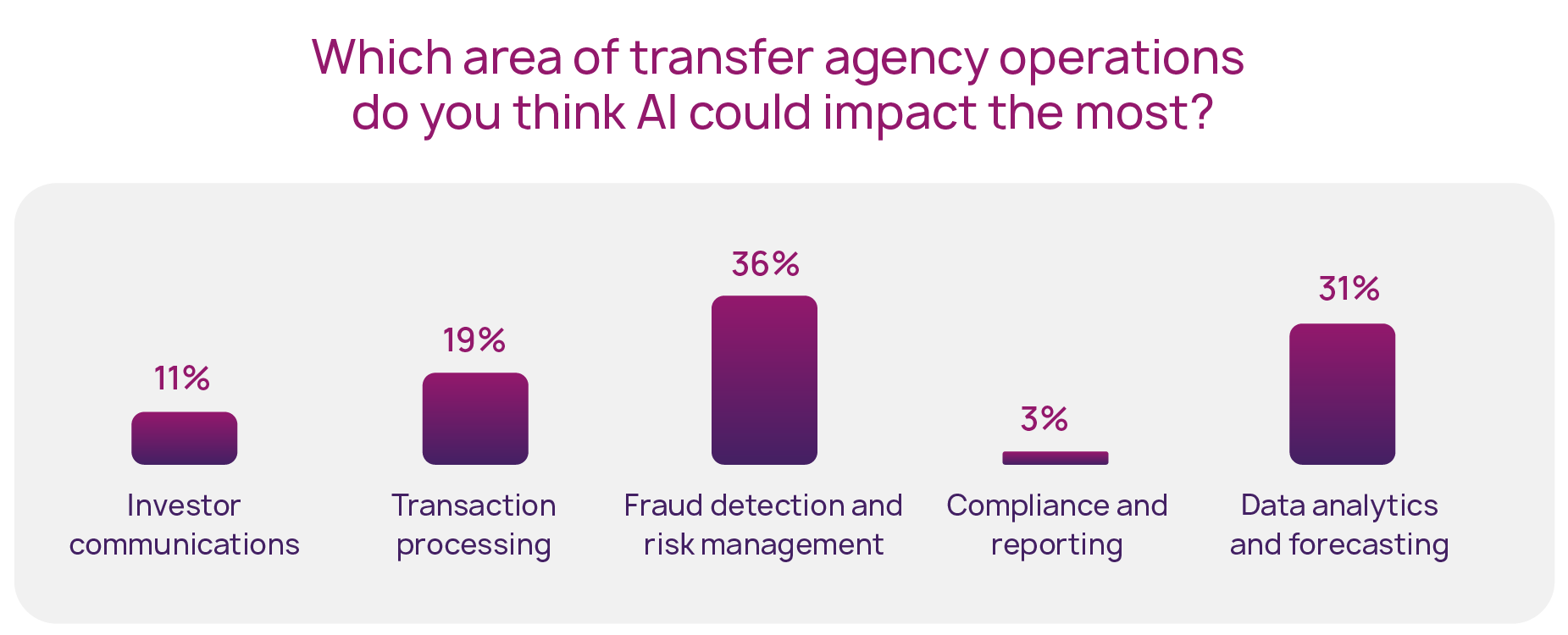
Three areas are shaping the way business leaders are sharpening their approach to AI:
- Potential AI use cases
- The evolving regulatory environment within the US and globally
- The importance of behavioural change and organizational alignment
Use Case 1: Leveraging current capabilities
The primary AI use case patterns in capital markets emphasize the significance of building reusable frameworks and production-ready solutions.
- Content generation applications: AI is being leveraged to generate and personalize content for investor relations, annual reports, and shareholder communications. According to one industry expert, some companies have reported productivity gains by automating 50-60% of content creation with human oversight.
- Information extraction solutions: Generative models of AI can extract valuable information from unstructured sources like PDFs and documents. This capability enables organizations to develop knowledge assistants that combine structured and unstructured data for better decision-making.
- Role-based digital assistants: The development of role-specific digital assistants, or “copilots,” is another significant use case. These digital assistants automate routine tasks, allowing employees to focus on higher-value activities.
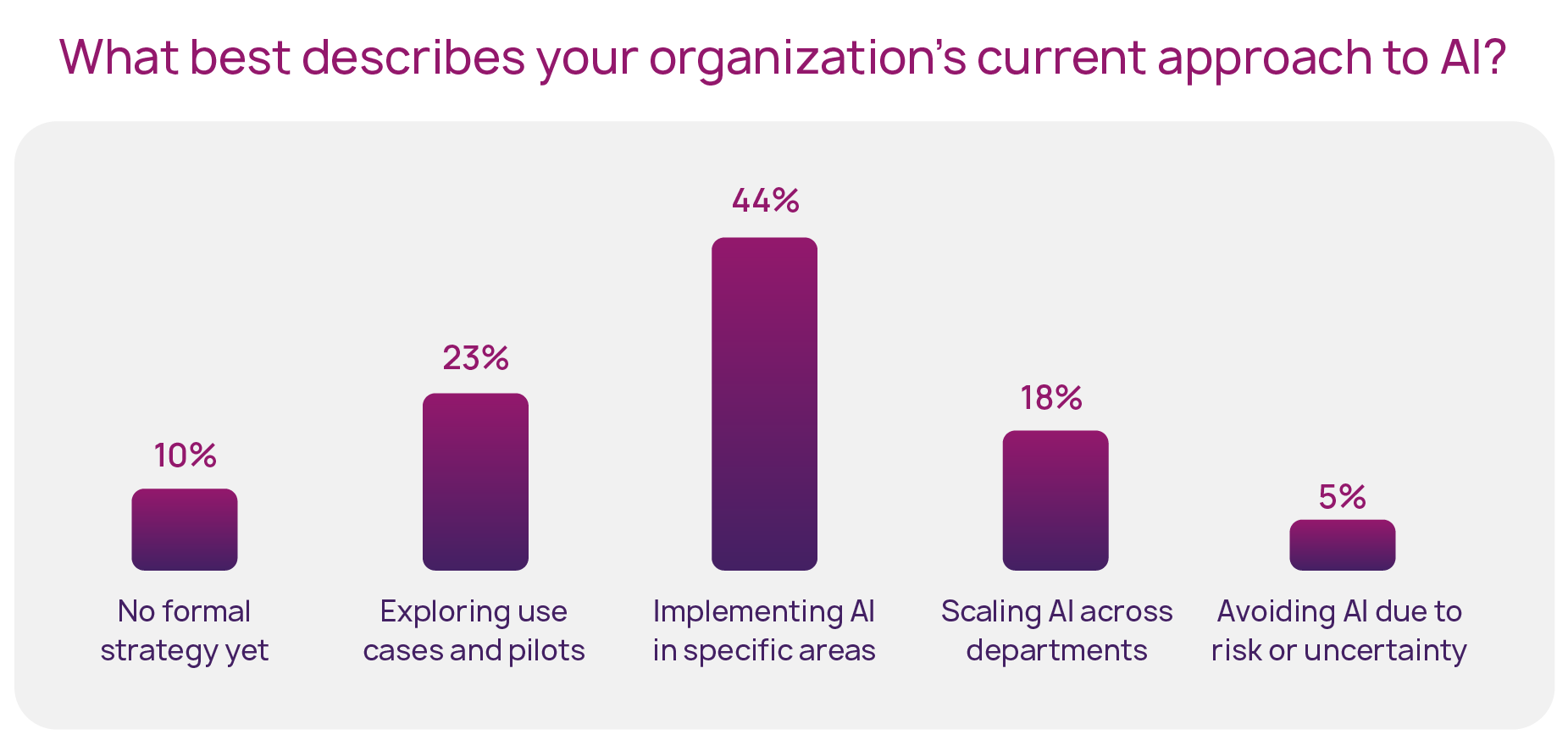
Use case 2: Governance and regulatory management
The evolving regulatory landscape for AI, including the complexities of data governance, are going to remain a central tenant of responsible AI frameworks. Legal cases, legislation, and practical data management issues will influence how AI frameworks will need to be adapted. Finally, data governance and deployment strategies are emerging as critical organizational musts when building a broader AI strategy, inclusive of data privacy and data accuracy considerations. Governance and organization-wide implementation should take into consideration:
- Global and local regulation: The lack of unified AI regulation in the US, the application of existing laws to AI, and the challenges of complying with diverse international regulations, especially for global companies. As of October 2025, there are several pending AI-related bills in the US House and Senate subject to debate
- Exploration, testing and maturity: Many organizations are creating “sandbox” or pre-production environments for short, low-risk sprints that allow employees to practice and learn with job-enhancing AI tools. High failure rates in AI projects are typical of early-stage technology adoption. As with all emerging technology – including the evolution of the internet – experimentation, starting small, and optimizing are essential for progress.
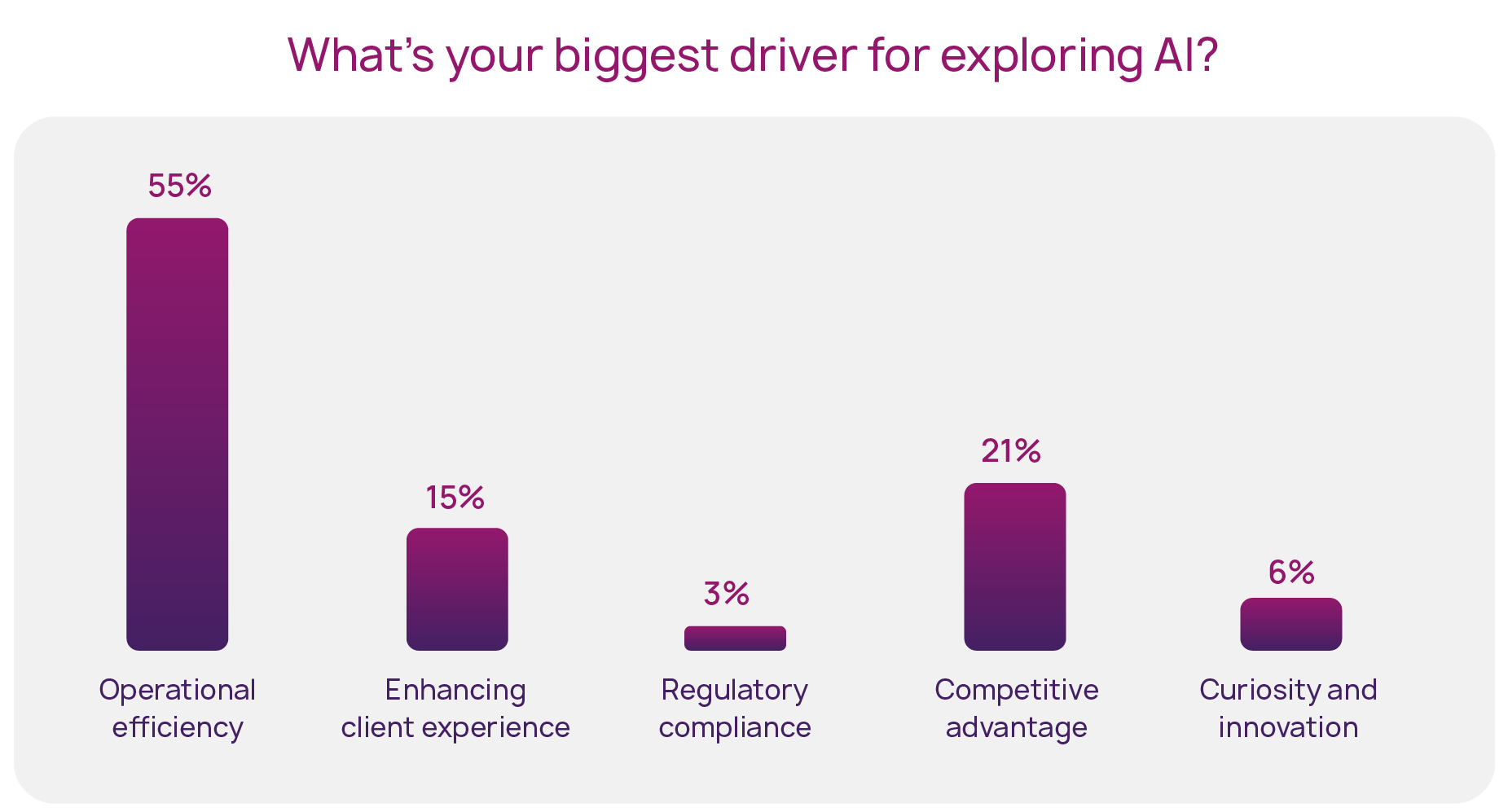
Use case 3: Organizational alignment
As leaders assess their AI strategy and incrementally implement opportunities to increase operational efficiency or boost security, there are five key items to consider based on expert AI insights from the 2025 Computershare Industry Conference:
- Alignment before algorithms: Leadership needs to be aligned on strategy and governance upfront.
- Regulation as design, not constraint: Shift your mindset to see regulation as a principle to build from.
- Follow the shadow AI employees: Early ROI often hides in the “shadow AI employees,” meaning team members who may be using AI tools to perform their function without official permission or oversight from your IT department.
- Different journeys are OK: Parts of the organization may need to move at different speeds.
- Technology has a track record of delivering: Use cases, clear measures of success, strong leadership, and training are vital to track the progress of AI-enabled technology.
In summary, reusable frameworks, responsible AI practices, and the importance of ‘test, measure, analyze and repeat’ with goal alignment underscores the complexity and potential of AI in transforming today’s global business environment.
Computershare is not providing, and does not intend to provide, any legal, tax or investment advice.

