
Employee Share Plans
Is Pre-IPO Share Plan adoption becoming the new standard for Hong Kong IPOs?

Share plan vesting schedules are are more than just administrative timelines; they are strategic instruments designed to incentivise long-term tenure and align employee interests with sustained company performance. Particularly for Hong Kong-listed companies, these structures are working to bridge the gap between broader corporate objectives and meaningful employee retention.
While every plan varies, a standard vesting cycle typically spans a 3.1-year period from the initial grant to the final vesting. This duration ensures that employees remain focused on the company’s multi-year growth trajectory.
The first milestone occurs at the 1.5-year mark. At this stage, the initial portion of the granted shares "vests", meaning legal ownership is transferred to the employee. Once vested, the participant has the autonomy to either retain or sell.
This is the final stage where all remaining conditions are met, and the employees granted shares have vested. For most participants, the entire process from grant to to 100% ownership is often completed in just over three years, providing a balanced cadence of rewards that reinforces loyalty.
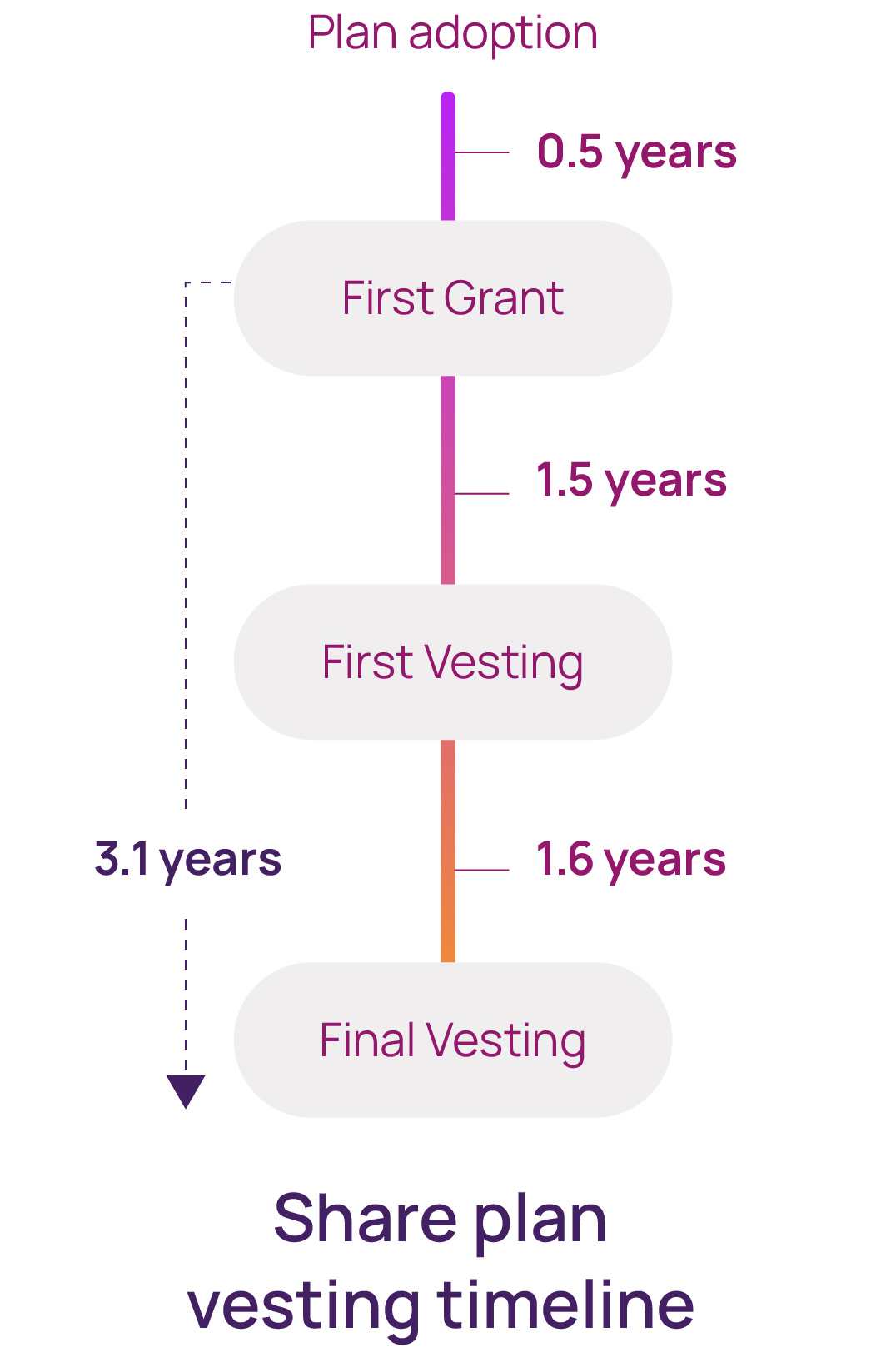
Vesting timelines are a strategic mechanism for employee retention. By using deferred ownership to align an employee’s personal financial gain with their long-term commitment to the company, companies can ensure top-tier talent is encouraged to stay. This approach ensures that employees obtain full access to their equity only upon completion of the entire vesting period, fostering long-term commitment and serving as a strategic tool for enhancing employee retention.
More specifically, as employees gradually vest in equity, their net worth becomes tied to the company’s valuation creating a culture of ownership where employees are motivated to drive growth and profitability as there is the idea of shared success. By incentivising tenure with vesting schedules, employees are less likely to leave the company prior to full vesting as this has a direct effect on their personal financial gain.
Additionally, by prioritising employee retention, companies are realising financial advantages beyond workforce stability. Aligning employees with a strategically designed vesting schedule creates incentive for existing staff to stay, which in turn eliminates costs associated with staff replacement such as advertising, recruitment, background checks, and the mere cost of training new employees.
For more insights, enter your business email address to receive our latest report. The report will be emailed to you.