


Employee Share Plans
Better experiences for every employee

Companies in Australia and New Zealand face a range of reporting requirements relating to their employee share plans. It can be difficult to manage without the right support. If businesses fall short of these obligations, they may face penalties and risk their reputation. At Computershare, we help organisations take the complexity out of these processes.

Australia has its own rules for financial reporting. Businesses need to know which regulators oversee their obligations and how these rules apply to their industry. This includes understanding how ASIC, the ATO and local market requirements influence what companies must report. Clear knowledge of these expectations forms the foundation of strong reporting.
In addition, regulatory requirements evolve over time. Companies need to stay informed about updates to accounting standards, tax rules and reporting guidance. Monitoring changes, attending industry events and partnering with share plan specialists like Computershare can help teams stay ahead of future developments, reduce compliance risks and maintain accurate, transparent reporting.

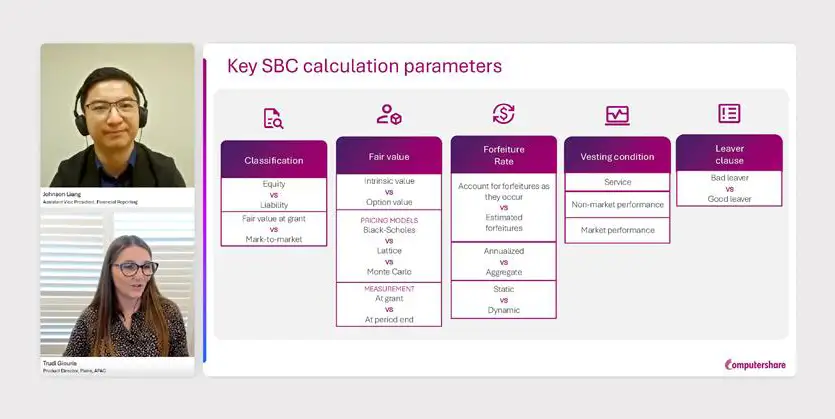
Australia and New Zealand companies much report their share based compensation expense under the International Financial Reporting Standards (IFRS 2). Some organisations may have overseas listings and need to align with other standards as well. Using the correct accounting framework and underlying technologies ensures financial information is consistent and accurate.

Reliable reporting starts with clear and consistent processes and comprehensive recordkeeping. Companies should record share plan activity as it happens and make sure the information is complete and correct. This includes grant details, participant changes and valuation inputs, supported by regular reviews help prevent errors and support smoother audit processes.
Equally important is maintaining detailed and transparent records for every award across its lifecycle. This includes grants, vesting outcomes, exercises, forfeitures and participant movements. Clear and accurate records give finance teams confidence in their share plan reporting, supports compliance obligations and make it easier to respond to audit or regulatory queries.

Events like mergers and acquisitions, share consolidations, share split, special dividends or initial public offering can change how share-based awards should be valued and expensed. Companies need to assess how these actions affect the fair value of awards and ensure any adjustments are documented and reported correctly. This helps avoid errors and maintains compliance with accounting standards.
The increasing use of equity compensation has elevated reporting into a complex, multidisciplinary area. As a result, many companies rely on specialised service providers and their technology platforms to help manage this complexity. A strong share plan financial reporting service provider can support by translating technical accounting guidance into practical, repeatable processes tailored to their specific plans and jurisdictions. Moreover, providers could serve as an ongoing source of insight, monitoring regulatory developments, standard updates, and evolving market practices that may impact share plan accounting.
We have over 1,000 equity experts across all major markets, ready to help you design and deliver the right employee equity solutions.