 |
Chapter 2 |
Designing equity for growth
Equity at scale: How plan design evolves as organisations grow
As organisations scale, equity plan design needs to work harder. Larger and more complex workforces often require different incentive structures, stronger governance and closer alignment with business priorities. This is moving companies beyond a single-plan approach towards more tailored frameworks designed around specific employee groups and long-term performance outcomes.
This is evident in how plan structures change by organisation size. Smaller companies continue to rely more heavily on options, while larger organisations are more likely to use a broader mix of options, awards and other equity mechanisms. These frameworks often include:

Tailored eligibility criteria

Varied vesting schedules

Multiple plans designed for different employee groups

Performance conditions linked to business objective
As companies focus on growth and scale, they often use share options to align employees with future value creation, while larger and more complex organisations are more likely to use share awards and multiple plan structures to support retention, executive alignment and long-term ownership.
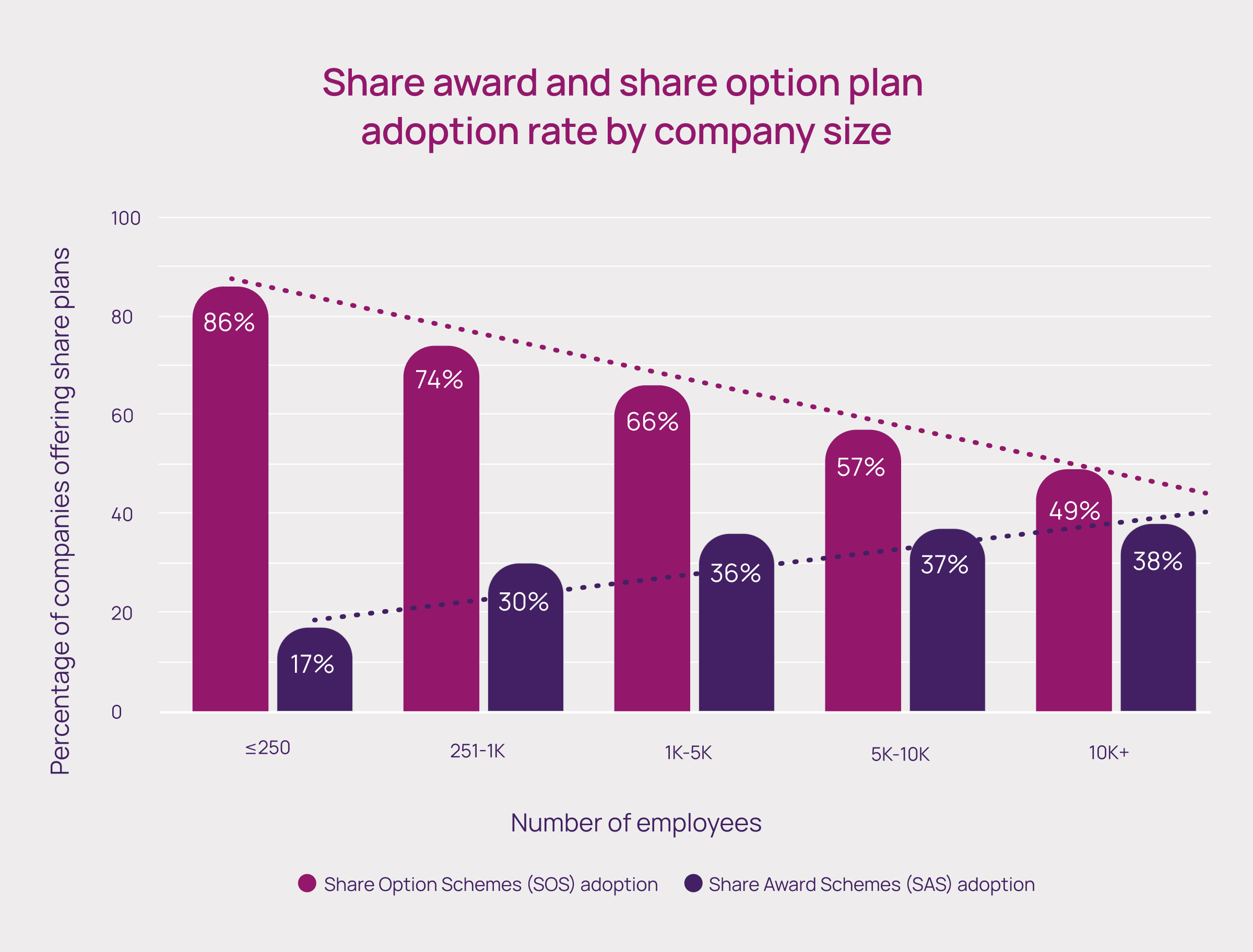
The data shows that plan design changes as organisations scale, with larger companies more likely to use diversified structures that reflect workforce complexity and talent priorities.

Smaller organisations rely heavily on options
86% of organisations with fewer than 250 employees use share options, compared with 17% using share awards.

The mix changes as organisations grow
The use of options generally declines with workforce size increases, while use of share awards rises to approximately 49% among organisations with more than 10,000 employees.

Larger organisations use equity more selectively
Organisations are more likely to operate multiple plans tailored to different employee groups and business objectives.
Talent pressure also shapes plan design
Organisations in competitive, talent-driven industries are more likely to use diversified equity structures to support attraction, retention and long-term alignment.
What this means for companies
As organisations grow, compete for specialised talent and pursue different business objectives, companies should regularly assess whether their equity structures, participation models and performance measures remain fit for purpose. They should also consider whether governance and administration capabilities are keeping pace with increasing complexity. Share plan design is often most effective when it reflects an organisation's size, workforce profile and broader remuneration objectives, rather than relying on a single market-standard approach.
Unlock Computershare's exclusive analysis
Unlock Computershare's exclusive analysis to see how companies are moving beyond simply granting equity to designing plans that are fit for purpose.





Disclaimer: The services mentioned in this analysis are provided by Computershare's licensed corporation in Hong Kong. This analysis is provided for general information only.